
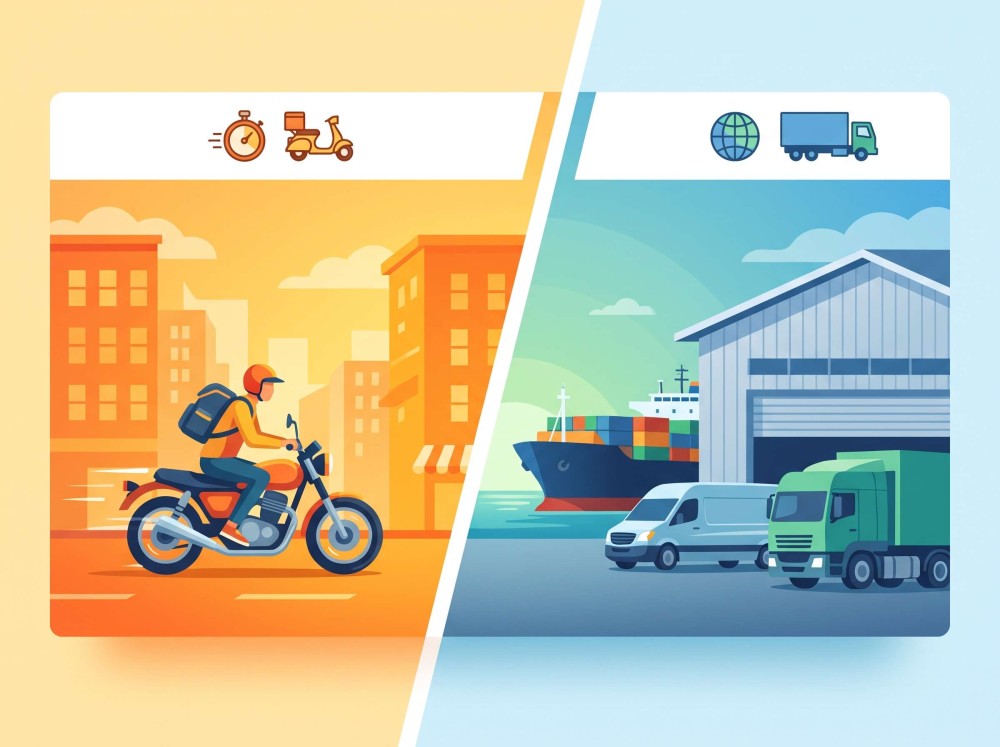
Which Model is Right for Your Business?
In today's rapidly evolving digital marketplace, businesses have more opportunities than ever to reach customers online. However, choosing the right selling model has become equally important. Two of the most popular approaches are Traditional eCommerce and Quick Commerce (Q-Commerce).
While both models help businesses sell online, they serve different customer needs, product categories, and business objectives. Understanding these differences can help brands build a profitable and scalable online strategy.
At Trechy, we help businesses successfully launch and scale across traditional marketplaces, D2C websites, and leading Quick Commerce platforms, ensuring they choose the right growth path for their products.
What is Traditional eCommerce?
Traditional eCommerce refers to selling products through online marketplaces or your own website, where deliveries typically take 1 to 7 business days, depending on the shipping location and logistics partner.
Popular Platforms Include:
- Amazon
- Flipkart
- Myntra
- Ajio
- Meesho
- Nykaa
- Your Own D2C Website
Traditional eCommerce focuses on offering a wide product catalog, competitive pricing, and nationwide or global reach.
Advantages of Traditional eCommerce
- Large customer base
- Wide product selection
- Lower operational costs
- Better inventory flexibility
- Easy expansion into national and international markets
- Suitable for long-term brand building
Best For
- Fashion & Apparel
- Electronics
- Home & Kitchen
- Furniture
- Beauty Products
- Sports Equipment
- Books
- Lifestyle Brands
What is Quick Commerce?
Quick Commerce (Q-Commerce) is the next generation of online retail that focuses on ultra-fast deliveries, often within 10–30 minutes. Instead of shipping products from large warehouses, orders are fulfilled from nearby micro-fulfillment centers or dark stores, enabling rapid doorstep delivery.
Popular Quick Commerce Platforms Include:
- Blinkit
- Zepto
- Swiggy Instamart
- BigBasket
- Other Hyperlocal Delivery Platforms
Quick Commerce is designed for products that customers need immediately.
Advantages of Quick Commerce
- Delivery within minutes
- Higher customer convenience
- Excellent customer retention
- Faster repeat purchases
- Ideal for impulse buying
- Strong growth in urban markets
Best For
- Grocery
- Daily Essentials
- Medicines
- Personal Care Products
- Baby Care
- Dairy Products
- Snacks & Beverages
- Pet Supplies
Traditional eCommerce vs Quick Commerce
| Feature | Traditional eCommerce | Quick Commerce |
|---|---|---|
| Delivery Time | 1–7 Days | 10–30 Minutes |
| Coverage | National & Global | Hyperlocal Cities |
| Inventory | Central Warehouse | Local Dark Stores |
| Product Range | Very Large | Limited Essential Products |
| Customer Intent | Planned Purchase | Instant Need |
| Logistics Cost | Moderate | Higher Per Order |
| Scalability | Nationwide & International | City-wise Expansion |
| Best For | Brand Growth | Speed & Convenience |
Which Model Should You Choose?
The answer depends on your business goals.
Choose Traditional eCommerce If:
- You sell products across India or internationally.
- You have a large product catalog.
- You want long-term brand growth.
- You focus on higher-value purchases.
- You want to build a D2C brand.
Choose Quick Commerce If:
- Your products fulfill urgent daily needs.
- Customers expect immediate delivery.
- You operate in metro or Tier-1 cities.
- Your products have high repeat purchase frequency.
- You want to increase convenience and customer loyalty.
Why Many Brands Are Choosing Both?
Rather than selecting one model over the other, many successful brands now adopt an omnichannel strategy.
For example:
- Fashion brands continue selling through Amazon and Flipkart while listing select essentials on Quick Commerce platforms.
- FMCG companies combine nationwide marketplace sales with hyperlocal instant delivery.
- D2C brands use their own website alongside marketplaces and Quick Commerce to maximize customer reach.
This hybrid approach enables businesses to balance brand visibility, customer convenience, and revenue growth.
How Trechy Helps Your Business Grow?
At Trechy, we provide end-to-end eCommerce solutions that help brands establish a strong digital presence across multiple sales channels.
Our Services Include:
- Marketplace Onboarding
- Quick Commerce Launch
- D2C Website Development
- Product Catalog Management
- SEO-Friendly Listings
- Product Photography & Brand Shoots
- Digital Marketing & Performance Advertising
- Inventory & Order Management
- Marketplace Account Management
- Business Growth Consulting
Whether you're launching a new brand or expanding an existing business, our experts help you choose the right commerce strategy based on your products, target audience, and growth goals.
Trechy supports brands across Traditional eCommerce, Quick Commerce, and Global Marketplaces with end-to-end launch and management services.
Final Thoughts
Traditional eCommerce and Quick Commerce are not competitors—they are complementary business models designed for different customer expectations.
Traditional eCommerce excels at offering variety, scalability, and nationwide reach, while Quick Commerce delivers unmatched convenience and speed for everyday essentials.
Businesses that strategically leverage both models can create stronger customer experiences, improve operational efficiency, and unlock sustainable long-term growth.
As consumer behavior continues to evolve, adopting the right commerce strategy today will position your business for greater success tomorrow.
Ready to Launch Your Brand Online?
Whether you want to sell through marketplaces, build your own D2C website, or expand into Quick Commerce platforms, Trechy provides complete eCommerce solutions to help your business grow faster.